What a CRM Actually Does (and Why Clean Data Matters)
A plain-English look at what a CRM like Salesforce is really for, why CRM data quality matters, and how messy data quietly breaks the reports and dashboards built on top of it.
“CRM” gets thrown around as if everyone already agrees on what it means. When I first heard the term, I pictured a fancy contact list. That’s part of it, but it misses the point. A CRM — customer relationship management system, with Salesforce being the best-known example — is really a shared record of every interaction a business has with its customers and prospects, structured so people can act on it.
This post is the explanation I’d give someone who keeps hearing “CRM” and “Salesforce” and wants to understand what’s actually going on. Everything here is general knowledge — no company’s internal setup involved.
The core idea: relationships, tracked over time
A business deals with a lot of people: leads who just filled out a form, prospects in active conversations, existing customers, past customers. Without a system, that knowledge lives in individual inboxes and someone’s memory — which falls apart the moment that person is away or leaves.
A CRM centralizes it. Every contact, every company, every conversation, every deal is a record that the whole team can see. The value isn’t the storage; it’s that the information is structured and shared, so anyone can pick up where someone else left off.
The pipeline
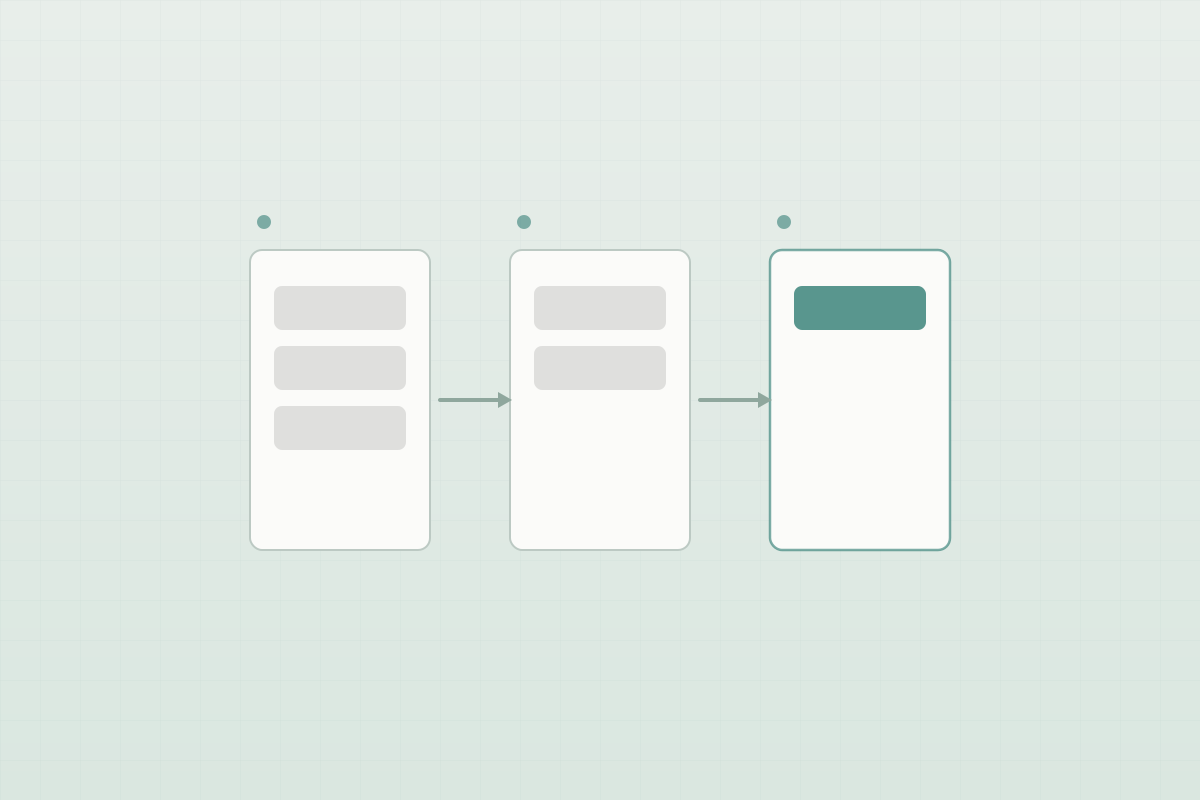
The concept that ties a sales-focused CRM together is the pipeline: the stages a potential deal moves through from first contact to closed.
A simple pipeline might look like:
- Lead — someone showed initial interest.
- Qualified — they’re a genuine fit worth pursuing.
- Proposal — you’ve sent them an offer.
- Negotiation — working out the details.
- Closed Won / Closed Lost — the deal succeeded or didn’t.
Each deal (“opportunity” in Salesforce terms) sits at a stage and moves along as things progress. Once that data exists, you can answer real questions: How many deals are in each stage? What’s the total value of everything in the pipeline? Where do deals tend to stall? That’s the difference between hoping sales is going well and knowing.
Lead scoring, briefly
Not every lead is worth the same attention. Lead scoring is the practice of ranking leads by how likely they are to convert — usually by assigning points for attributes and behaviors: job title, company size, whether they opened your emails, whether they requested a demo. A high score tells the team where to spend their time first. You can start with simple, rule-based scoring long before anything involving machine learning.
Why clean data quietly decides everything
Here’s the part that took me a while to appreciate: a CRM is only as useful as the data inside it. Every report, forecast, and automation is built on the assumption that the underlying records are accurate. When they’re not, the whole thing degrades — usually without any error message.
The common problems are unglamorous but costly:
- Duplicates. The same customer entered three times means your customer count is wrong and someone gets emailed three times.
- Missing fields. If half your leads have no “source” recorded, you can’t answer which channels actually work.
- Inconsistent values. “QC,” “Quebec,” and “Québec” as three different regions will split what should be one number across three rows.
- Stale records. A deal marked “open” that actually closed months ago inflates your pipeline and misleads the forecast.
None of these throw an error. The dashboard still renders; it’s just quietly wrong. That’s what makes data hygiene so important — the cost of messy data shows up as bad decisions, not broken software.
A few habits that keep CRM data healthy
- Validation rules so required fields can’t be left blank and values have to come from a controlled list (a dropdown, not free text).
- Standardized picklists instead of open text wherever possible — this alone prevents most of the “Quebec vs QC” mess.
- Regular de-duplication, either with built-in tools or a periodic review.
- A clear definition of each stage so everyone moves deals along by the same rules, and the pipeline means the same thing to everyone reading it.
Wrapping up
A CRM isn’t a fancy address book — it’s the structured memory of a business’s relationships, and the pipeline is the story of where every deal stands. But all of that rests on data quality. The most sophisticated report in the world is worthless if it’s counting duplicates and blank fields. If I had to give one takeaway to anyone working with a CRM, it’s this: protect the data going in, and the insights coming out will take care of themselves.